Keep pumping when the power dies
Storms that fill weeping tile often cut electricity—backup is the layer that protects finished basements.
Niagara homeowners who lived through recent flood events asked first for battery backup and secondary pumps. A primary pump alone stops when the grid fails. Choose backup gear for how wet your pit actually runs—not brochure maximums.
UPS on the primary vs a second DC pump
Battery power on the primary only helps while that pump works and often yields short continuous runtime. A dedicated high-efficiency secondary pump with its own float plus a deep-cycle battery covers primary failure and longer outages. That distinction is the most important buying decision on this page.
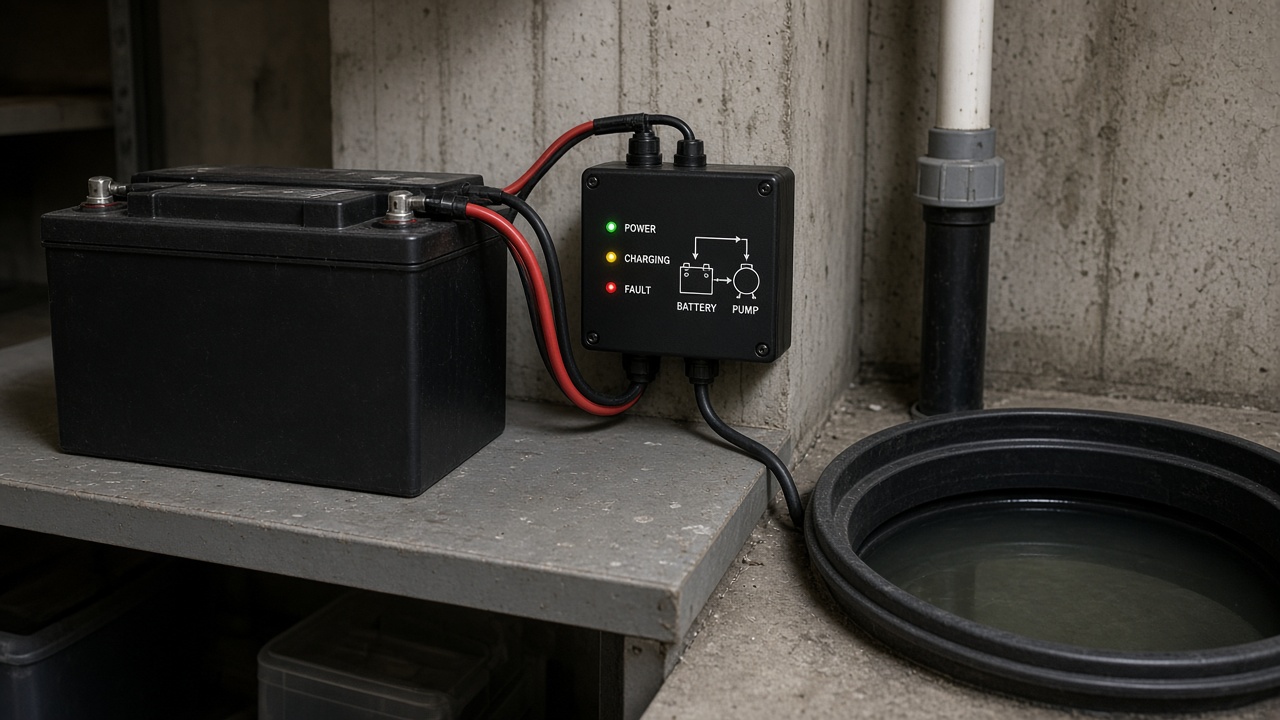
Runtime honesty
Continuous pumping may last only hours; intermittent cycling can last longer. Ask for duty-cycle numbers that match your inflow, not marketing peaks. Alarms warn of high water or low battery even when backup is installed.
Water-powered backups
Water-powered units need municipal water pressure and backflow protection. Local St. Catharines discussion includes homeowners who preferred battery systems after trying water-powered options. Match the technology to your water service and risk tolerance.
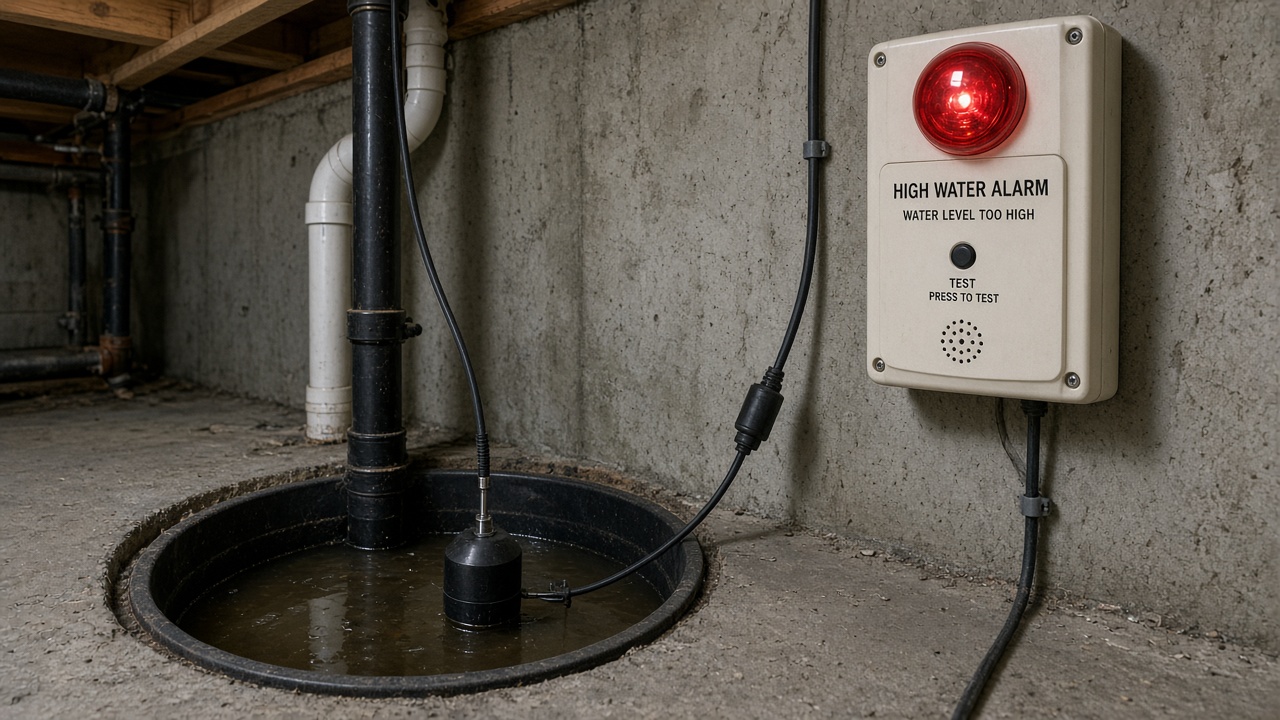
Rebates and existing pits
St. Catharines Emergency FLAP may include secondary/backup pumps when tied to eligible weeping-tile disconnect work. Welland SWAP expects backup power as needed for the sump system. Stand-alone backup add-ons may not qualify—check City rules. Crowded small pits may need a larger basin before a second pump fits.
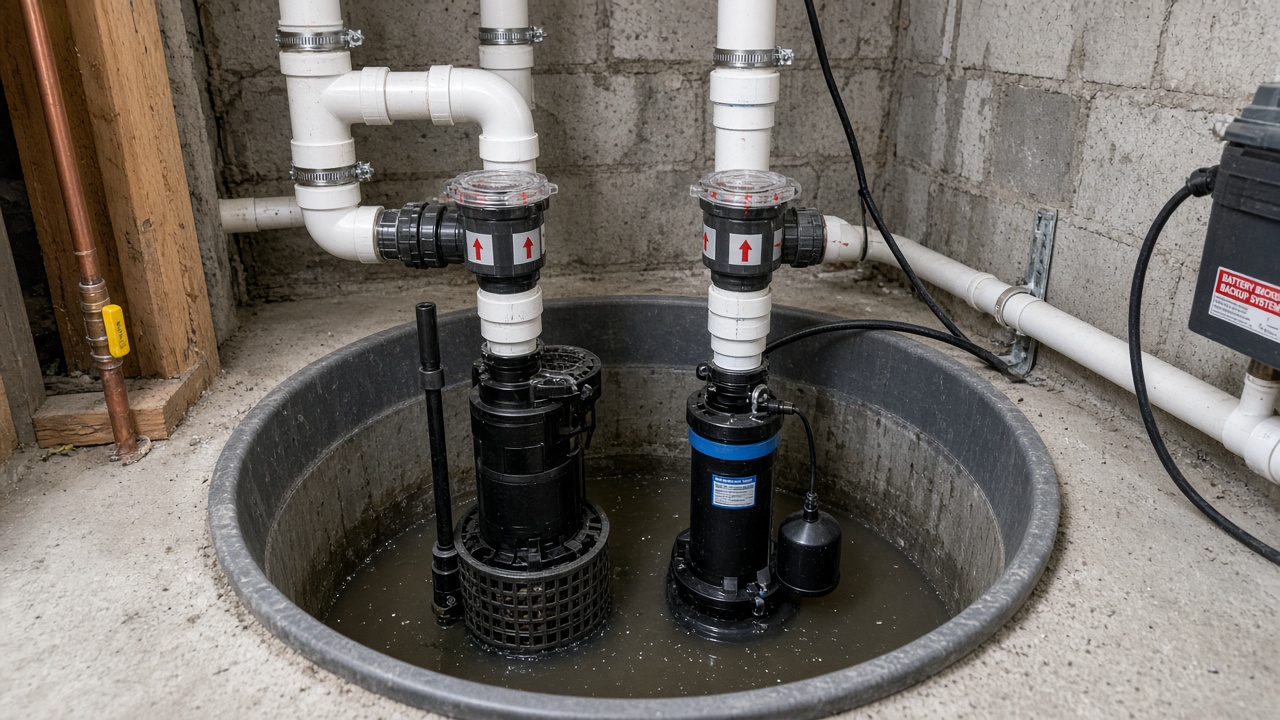
Ask for a written quote that lists the backup pump, battery, charger, alarm, testing, and any electrical work.
Matching backup to basement risk
Finished recreation rooms, ground-floor-equivalent walkouts, and homes on known wet lots justify stronger redundancy than an unused storage cellar. Dual independent floats matter: if the primary float fails, a battery on that same switch may never start. Secondary pumps with their own controls close that gap.
Generators help for long outages but need safe installation, fuel, and transfer equipment. Many households start with a battery secondary pump and add generator capability later. Alarms bridge the gap by waking someone before water reaches finished floors.
Maintenance calendar
Press the test button on the backup controller before storm season. Confirm the charger shows a healthy battery. Replace batteries on the manufacturer’s interval—commonly three to five years in homeowner discussion—even if the unit “looks fine.” A swollen or sulphated battery will not last a multi-hour outage.
Clean the pit so secondary floats are not fouled by silt. After any primary pump replacement, re-check that the backup still has room to operate and that discharge Y-fittings remain serviceable.
Talking to contractors about runtime
Ask for continuous-pumping estimates and intermittent duty-cycle estimates using your observed fill rate. Marketing claims of “days of protection” usually assume the pump barely runs. Niagara clay after a derecho-style storm is not that scenario. Honest sizing prevents buying false confidence.
Space planning inside the pit
Eighteen-inch basins fill quickly with two pumps and two floats. Some secondary units hang or “float” off the floor to save space; others need a wider basin retrofit. Measure before you buy a kit online. Crowding that lets floats tangle recreates the continuous-run failure mode backups are meant to prevent.
Controller placement should stay dry and reachable. Chargers need an outlet that remains powered when branch circuits are thoughtfully arranged—avoid plugging the charger into a GFCI that trips whenever the primary pump starts under load if that is a known quirk of the panel.
Insurance and peace of mind
Some insurers ask about sump presence and backup after claims. Document installation with photos and receipts. Backup does not make flooding impossible—extreme inflow, failed floats on both pumps, or a crushed discharge line can still win—but it removes the most common outage failure from the story.
For households that travel, Wi-Fi water alarms add remote notice. Local power outages may take Wi-Fi down too, so cellular or neighbour checks still matter. Layer defences rather than trusting a single gadget.
Building a layered defence
Think in layers rather than gadgets. Layer one: primary pump sized for inflow. Layer two: clear discharge that cannot ice shut. Layer three: secondary pump with independent float and battery. Layer four: high-water alarm. Layer five: optional generator for multi-day outages. Skipping layers because a brochure promised “complete protection” from one device is how finished basements still flood.
Budget conversation should separate must-haves from nice-to-haves. On a finished Niagara basement with known wet springs, layers one through four are usually the adult conversation. On a dry storage cellar with rare cycling, a quality primary plus alarm may be enough while you monitor. Risk tolerance and basement use drive the stack.
When municipal rebates enter the chat, ask whether backup is eligible only as part of weeping-tile disconnect work. Do not assume a stand-alone battery install will be reimbursed. Keep City confirmation in writing.
Re-test after any plumbing or electrical work in the mechanical room. Contractors unrelated to the sump sometimes move cords or unplug chargers. A two-minute test after other trades leave prevents discovering the problem during the next storm.
Frequently asked questions
Is a battery backup worth it if storms knock out power?
Yes for most finished or high water-table homes — outages often hit during the same storms that fill weeping tile.
Battery on the primary pump vs a second DC pump?
A UPS/battery on the primary only helps while that pump works and often yields short continuous runtime. A dedicated high-efficiency secondary pump + battery covers primary failure and longer runtime.
How long will a backup run?
Depends on pump draw and how often it cycles — continuous pumping may be only hours; intermittent cycling can last longer. Ask for realistic duty-cycle numbers, not brochure maxima.
How often do I replace the battery?
Homeowners commonly cite roughly every 3–5 years (some say about 3) depending on battery type and testing. Test before storm season.
What about water-powered backup?
Water-powered units need municipal water pressure and have mixed local reviews; some St. Catharines homeowners prefer battery backups after trying water-powered.
Rough installed cost for backup?
DIY kits and contractor installs vary widely with equipment and access. Ask for an itemized quote for your pit and runtime needs.
Will backup help if the float switch fails?
Only if the backup has its own float/controls. Battery power alone on a failed primary float may not start.
Do municipal rebates cover backup pumps?
St. Catharines Emergency FLAP may include secondary/backup pumps when tied to eligible weeping-tile disconnect work. Welland SWAP expects backup power as needed for the sump system. Stand-alone backup add-ons may not qualify — check City rules.
Do I still need an alarm?
Alarms warn of high water or low battery even with backups.
Can I add backup to an existing pit?
Often yes if the pit has space for a secondary pump/float; crowded small pits may need a larger basin.