Sump pump installation in Niagara
New pits, pump replacements, and battery backups for Niagara Falls, St. Catharines, Welland, and nearby communities—plus clear municipal rebate guidance.
Water in a Niagara basement rarely feels abstract. It shows up as a sump pit overflowing during a July downpour, a pump that hums without moving water, iced discharge on a winter lawn, or a home inspection note that stalls a sale. We help homeowners sort out whether the problem is a failed float, a missing backup during a power outage, weeping tile still tied into the sanitary sewer, or groundwater that never reaches a pit at all—then quote the work that matches that job.
Call or request a quote with your city, whether a pit already exists, and when water appears. Installation, replacement, battery backup, and drainage solve different failure modes. Understanding that landscape before work starts helps you compare written scopes and avoid paying for the wrong fix.
Sump pump versus backwater valve
Homeowners often use “flooded basement” for two different failures. Groundwater collected by weeping tile belongs in a sump pit and should discharge outdoors away from the foundation. Sewage rising through a floor drain is a sanitary surcharge problem—a backwater valve on the building drain is the device that helps stop that reverse flow. Niagara rebate programs frequently fund both paths because storms overload sewers and raise groundwater at the same time. Treating a sewer backup with a larger pump alone leaves the wrong failure mode unfixed.
Before you finish a basement or sign a waterproofing contract, collect a short history: where water appeared, whether it followed rain or thaw, any odour, previous repairs, and safe photos. That history is what separates a pump call from a plumber call from a full drainage redesign.
What a complete system includes
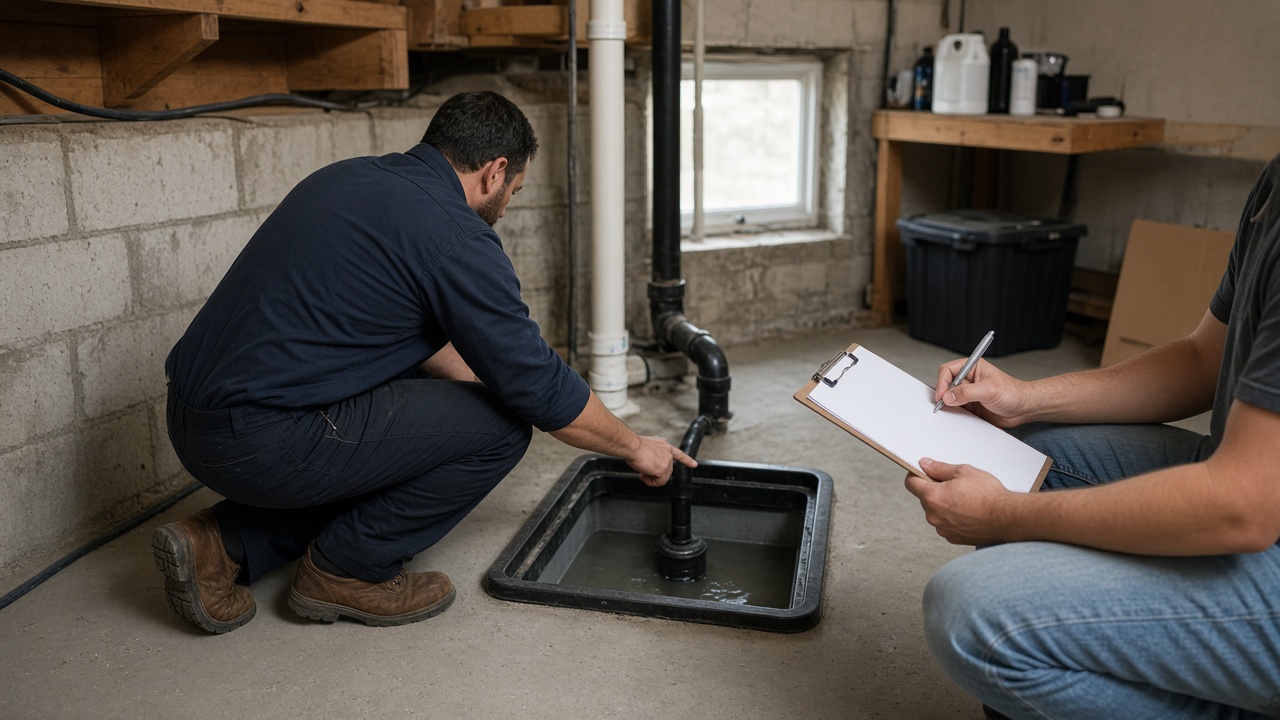
A working residential system is more than a motor in a hole. The basin collects water from perimeter drains or floor low points. The primary pump ejects that water through a check valve and discharge line. Backup power or a secondary pump covers outages and primary failure. An alarm warns before overflow. Outdoor termination must stay clear through Niagara winters. Miss any one of those pieces and the system fails on the night you need it most.
Maintenance is seasonal. Test the float with a bucket of water before spring melt and before heavy fall rains. Clean silt from the pit—clay areas such as Welland and Pelham build sediment faster. Listen for grinding or rattling. Replace backup batteries on a multi-year cycle rather than discovering a dead battery mid-storm.
Who we help
Homeowners with an active flood or sump failure; owners finishing basements who need proof of dryness; buyers and sellers facing inspection notes; residents applying for municipal WRAP, FLAP, or SWAP work; and households that lost power during a storm and found the pit full. Structural underpinning and mold remediation beyond moisture control are outside this scope—we’ll say so if another trade is the better fit.
When a Niagara basement floods, triage the system
After recent regional storms, Niagara homeowners described sump overflow alongside outdoor drainage problems—and empty shelves at hardware stores. Start with what you can check safely:
- Confirm the primary pump — lift the float or pour water into the pit; listen for discharge outdoors
- Clear the discharge path — ice, leaves, or a hose dumping beside the foundation recirculates water
- Plan backup power — storms that fill weeping tile often knock out electricity at the same time
- Separate sewer backup — water rising through floor drains with sewage odour is a backwater-valve problem, not a “bigger sump” alone
If water returns after those checks, an on-site diagnosis should separate pump failure from missing drainage from municipal rebate-eligible weeping-tile work.
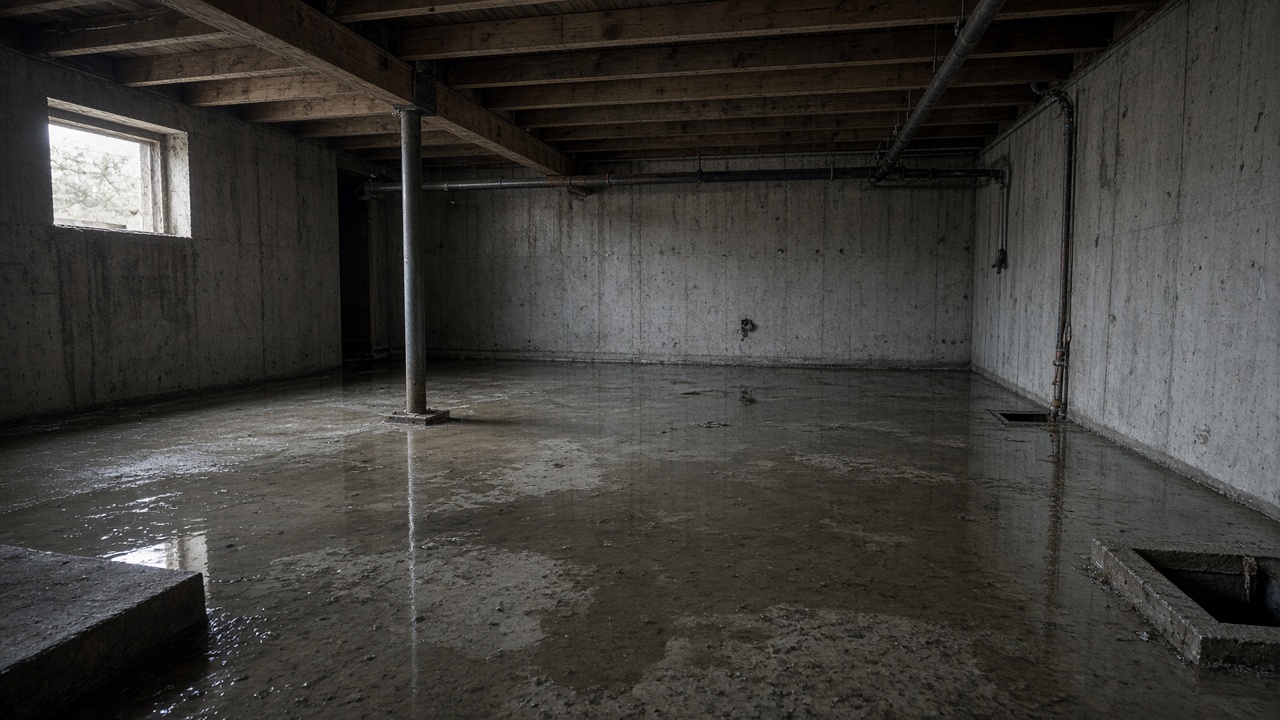
Why Niagara basements take on water
The Region sits between the Great Lakes with Escarpment runoff, clay and sand soil mixes, and a seasonally high water table in low-lying and lakeside areas—along the Welland Canal corridor, Crystal Beach, Port Dalhousie, and Escarpment-base neighbourhoods. Spring melt and intense summer storms raise hydrostatic pressure against foundations. A pump only helps if water is collected to the pit and discharged safely away from the house.
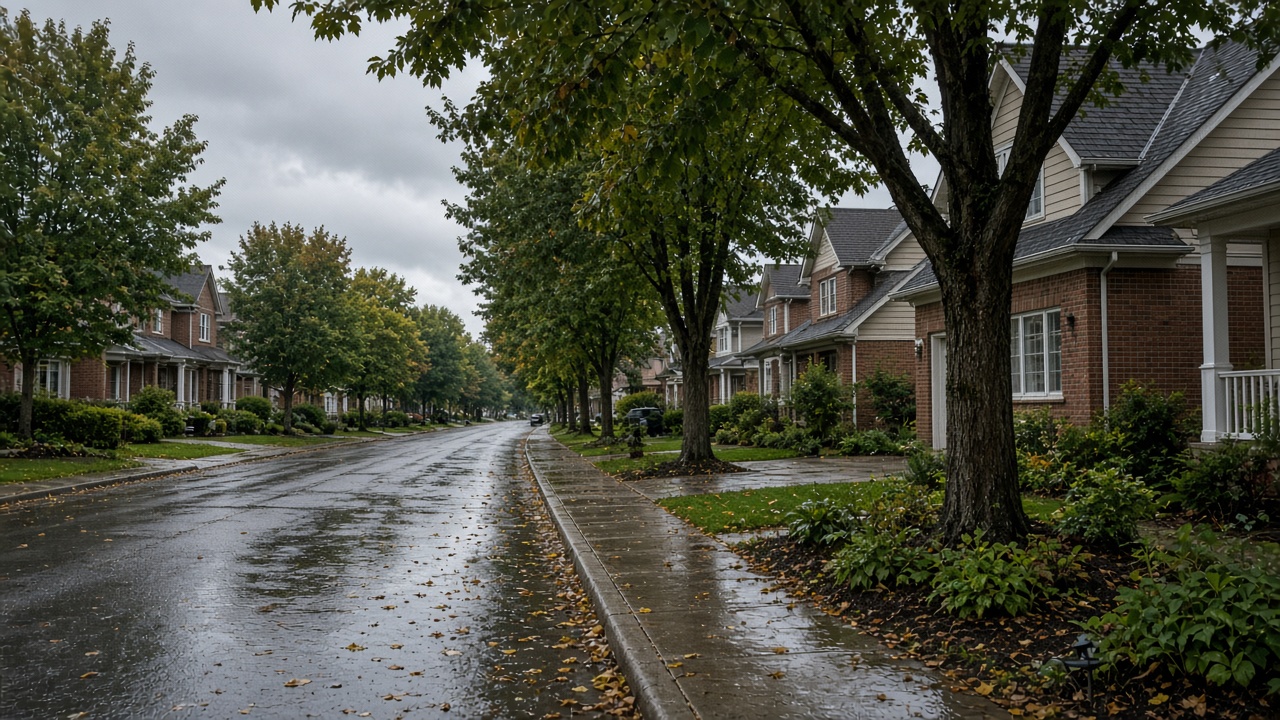
Three jobs homeowners usually need
Most Niagara enquiries fall into one of three scopes. Saying which one you need—or that you are unsure—helps us write a comparable quote.
- New pit and pump — first-time groundwater control: basin, primary pump, check valve, discharge, and often electrical. Rebate programs in Niagara Falls, St. Catharines, and Welland often intersect with weeping-tile disconnection, not a stand-alone shelf swap. Installation details
- Replace an existing pump — the pit is there, but the pump hums without flow, short-cycles, freezes at the outlet, or has failed. A written swap quote should name the pump, check valve, reused versus changed parts, disposal, and a final test. Repair and replacement
- Battery backup — a secondary pump with its own float and battery covers outages and primary failure. Ask what runtime assumptions apply to your inflow, and what is included: pump, battery, charger, alarm, testing, and maintenance. Backup systems
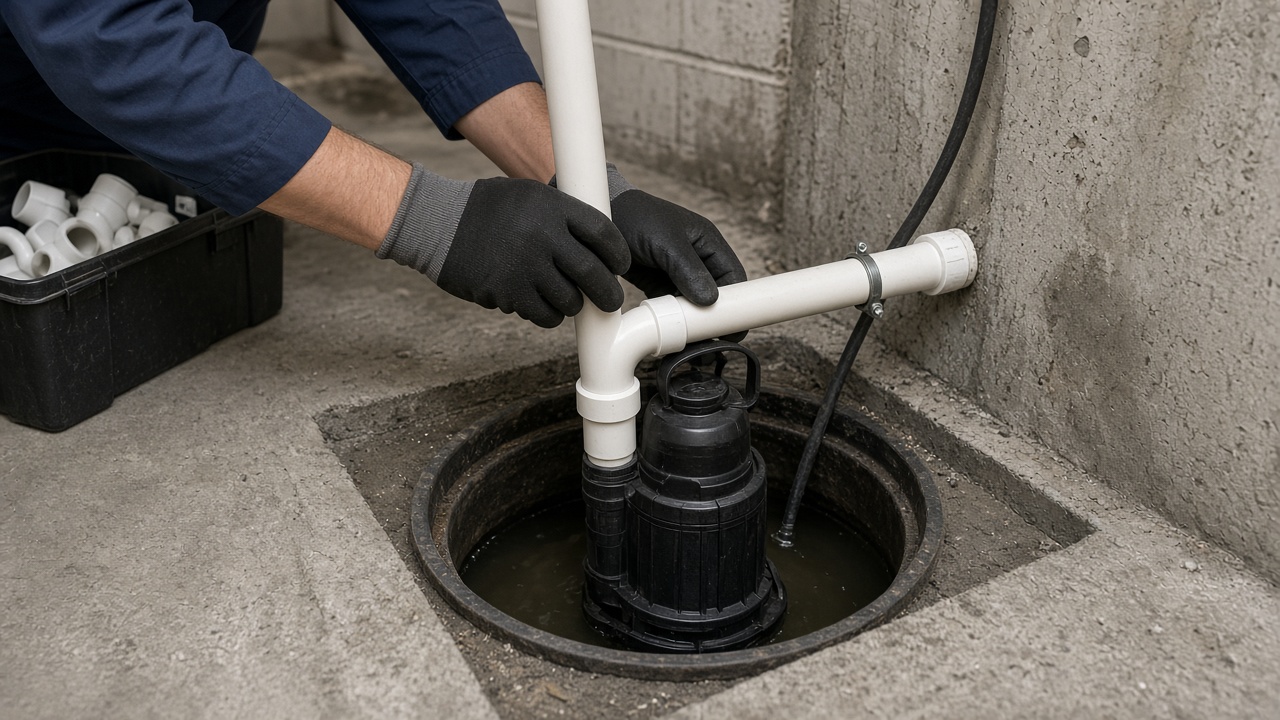
Battery backup for storm outages
A UPS on the primary pump only helps while that pump works and often yields short continuous runtime. A dedicated high-efficiency secondary pump with its own float plus a deep-cycle battery covers primary failure and longer outages. Water-powered backups need municipal pressure and draw mixed local reviews. Batteries commonly need replacement every three to five years—test before storm season.
Read the battery backup guide for runtime honesty and rebate intersections.
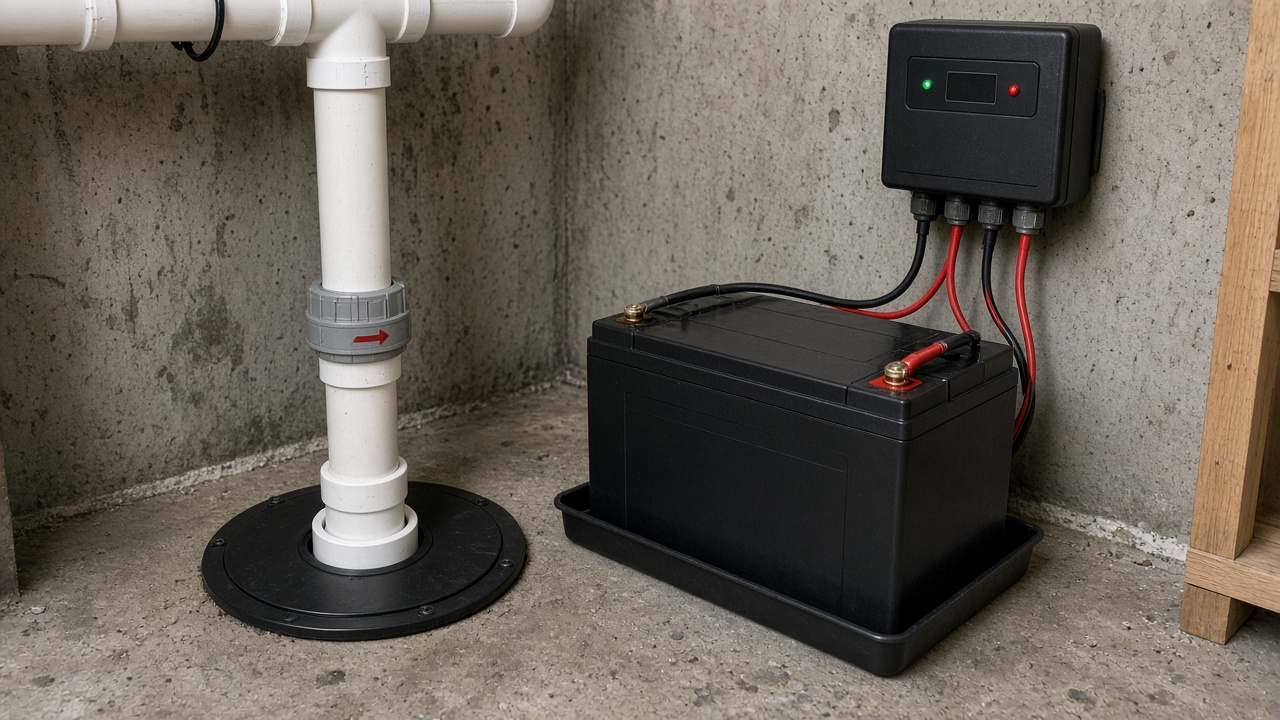
Drainage when a pump alone is not enough
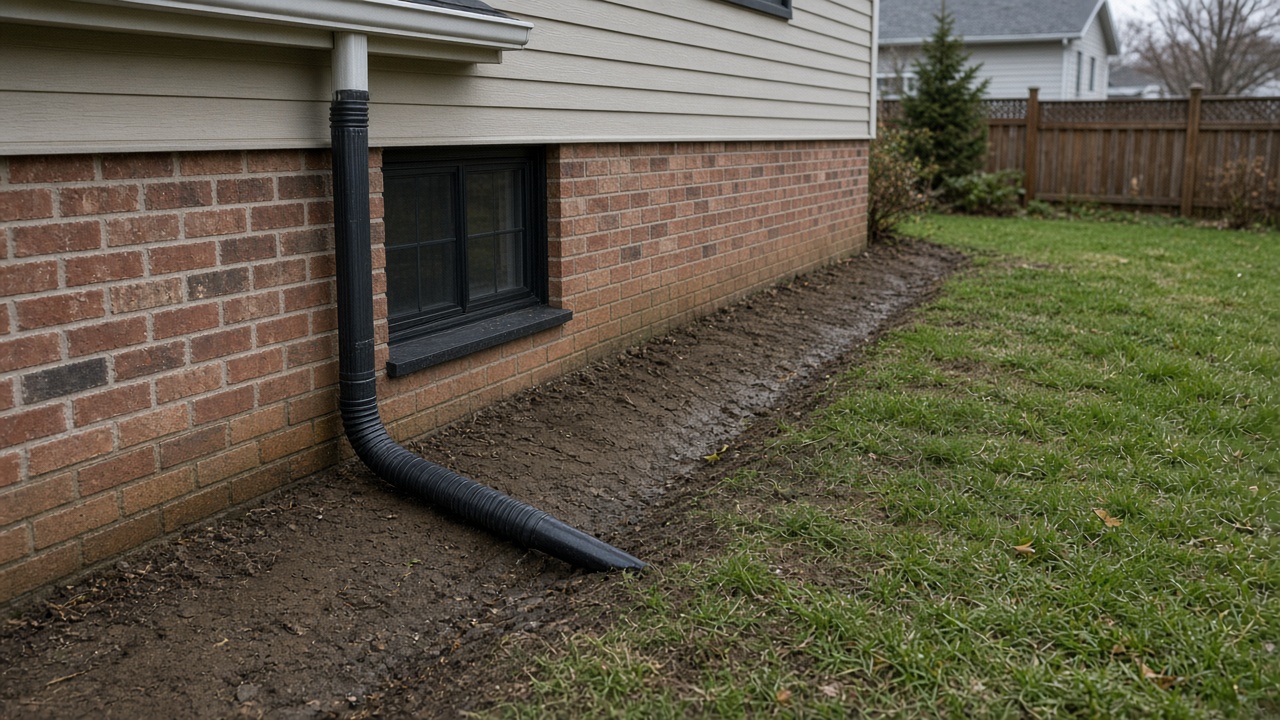
If water never reaches the pit, installing a stronger pump will not dry the walls. Interior weeping tile to a sump manages cove and under-slab pressure; exterior French drains and grade corrections keep surface water away. Fix gutters and downspouts before expensive digs. Municipal WRAP, FLAP, and SWAP programs fund specific sanitary-disconnect scopes—not general landscaping drains.
Read the drainage guide for interior versus exterior choices and pipe details.
What affects the quote
What you pay depends on the job: new pit versus pump swap, discharge path, electrical, backup equipment, finished versus unfinished access, permits, and restoration. Your written estimate will reflect your home.
What usually changes the number:
- New basin and concrete cutting versus reuse of an existing pit
- Pump class, check valve, and discharge routing (including freeze risk)
- Battery backup, charger, and alarm—if included
- Electrical work and permits
- Cleanup, disposal, and restoration
Sample quote checklist
Use this checklist when you review a written estimate—ours or anyone else’s—so every bid covers the same job.
- Job type: new pit, replacement in existing pit, or backup retrofit
- Pump model / horsepower class and check valve
- Discharge materials, termination, and freeze protection
- Backup pump, battery, charger, alarm, and stated runtime assumptions
- Electrical, permits, and who pulls them
- Cleanup, disposal, and restoration
- Warranty terms—if offered—in writing, plus exclusions and taxes
Niagara municipal rebates
City programs can offset eligible weeping-tile disconnection and sump work. Caps, property rules, and funding windows differ by municipality—and they are not general membrane waterproofing subsidies. Confirm eligibility and current amounts with the City before work starts.
- Niagara Falls WRAP — weeping-tile disconnection + sump installation, and a separate backwater-valve category for qualifying urban homes
- St. Catharines Emergency FLAP — percentage reimbursement for eligible backwater and disconnect-to-sump work (stand-alone pump swaps are often ineligible)
- Welland SWAP — separate categories for backwater valves and sanitary disconnect / sump work, with pre-inspection and quote rules
Read the Niagara rebates guide for dated program details and official City links.

Service area
We focus on Niagara Falls, St. Catharines, and Welland, with the wider Niagara Region on enquiry. Ask when you call about Thorold, Fort Erie, Niagara-on-the-Lake, Port Colborne, Pelham, and nearby communities.
What to expect from call to dry pit
A typical path after you request a quote:
- Intake — city, photos, when water appears, finished or unfinished, existing pit, outage history
- Diagnosis — float, discharge, grade, weeping-tile connection questions for rebates
- Written quote — pump, pit work, discharge, backup, electrical, permits
- Permits / municipal pre-approval — when on a rebate path
- Install, test, aftercare — keep discharge clear; test backup; seasonal checks
Sump pump FAQs for Niagara
My Niagara basement flooded / sump overflowed — what should I fix first: battery backup, discharge, or outdoor drainage?
Triage in order: confirm the primary pump still runs; check the outdoor discharge is clear and not recirculating to the foundation; then add backup power/secondary pump for the next outage-storm; separately assess exterior drainage and grading. Recent Niagara flood threads show homeowners seeking both backup sump work and outdoor drainage help after overflow events.
After big Niagara / St. Catharines storms, stores sold out of sump pumps — should I wait or call a pro?
After major storms, retail pumps and shop vacs sell out quickly. If water is active, prioritize stopping inflow (sandbags/temporary pump) and call for a correctly sized pit/discharge system rather than waiting on empty shelves alone.
Is a sump pump the same as a backwater valve for Niagara basements?
No. A sump pump removes groundwater collected in a pit; a backwater valve helps stop sewer backup into floor drains. Niagara rebate programs often fund both paths because they solve different failures.
Do I need a sump pump to waterproof a Niagara basement?
Not always — small leaks with good exterior drainage may not need one — but high water table / frequent flooding homes in the Region commonly need a sump as part of interior drainage.
How much does sump pump installation cost in Ontario?
Cost depends on whether you need a new pit, a pump swap in an existing pit, discharge rework, electrical, backup equipment, permits, and restoration. Compare itemized scopes for the same job—not headline totals alone. Ask for a written quote for your property.
Is there a rebate for sump pumps in Niagara Falls?
Niagara Falls WRAP can rebate eligible weeping-tile disconnection and sump installation, plus a separate backwater-valve category, for qualifying single/semi-detached urban homes. Caps and rules change—apply and follow City terms before work. See our rebates guide for official links.
What about St. Catharines or Welland rebates?
St. Catharines Emergency FLAP reimburses a high percentage of eligible backwater and weeping-tile disconnect-to-sump work (stand-alone pump swaps are often ineligible). Welland SWAP has separate valve and disconnect/sump categories with pre-inspection and quote rules. Confirm current amounts and deadlines with each City.
Should I waterproof / fix drainage before finishing the basement?
Yes — control liquid water and humidity first. Local advice stresses grade, downspouts, drainage, and sometimes engineering before cosmetic finishes. Prove dryness through heavy rain/melt before framing.
Why are Niagara basements so prone to water?
Great Lakes proximity, Escarpment runoff, clay/sand soils, and a fluctuating water table push groundwater toward foundations — especially in low-lying and lakeside neighbourhoods.
How do I choose among very different quotes?
Align scope: new vs existing pit, pump HP/brand class, check valve, discharge path, backup included?, electrical, permits, debris removal, warranty in writing. A much cheaper bid often omits pit work or backup.
Services
Sump pump installation
New pits, primary pumps, check valves, and discharge planning for Niagara homes.
Sump pump repair
Float, impeller, check valve, and freeze failures—repair versus replace.
Battery backup systems
Secondary pumps, runtime honesty, and outage protection.
Drainage solutions
Weeping tile, French drains, and grade fixes that feed a working sump.